We connect you with licensed commercial solar advisors and installers to cut operating costs with solar, battery storage, and peak shaving. Serving Alberta and British Columbia businesses across every stage of the incentive and financing process.
Most business owners have never seen commercial solar broken down in dollars. Here's a representative 50 kW system, modeled with the same per-kW costs, incentive treatment, and utility escalation used in real client cash-flow proformas, so you know what a serious proposal should show you before anyone asks you to sign anything.
| Line Item | Amount |
|---|---|
| Gross System Cost (50 kW × ~$1,850/kW) | $92,500 |
| Federal Clean Technology ITC (30%, refundable) | -$27,750 |
| Year 1 Accelerated CCA Deduction (illustrative) | -$12,719 |
| Net Effective Year 1 Cost | $52,031 |
| Estimated Annual Production | 60,000 kWh |
| Estimated Year 1 Utility Savings | $9,000 |
| Estimated Payback Period | ~5.4 years |
| Estimated 25-Year Lifetime Savings | $350,549 |
Illustrative example, not a quote. See our incentives and financing pages for the full breakdown and province-specific models.
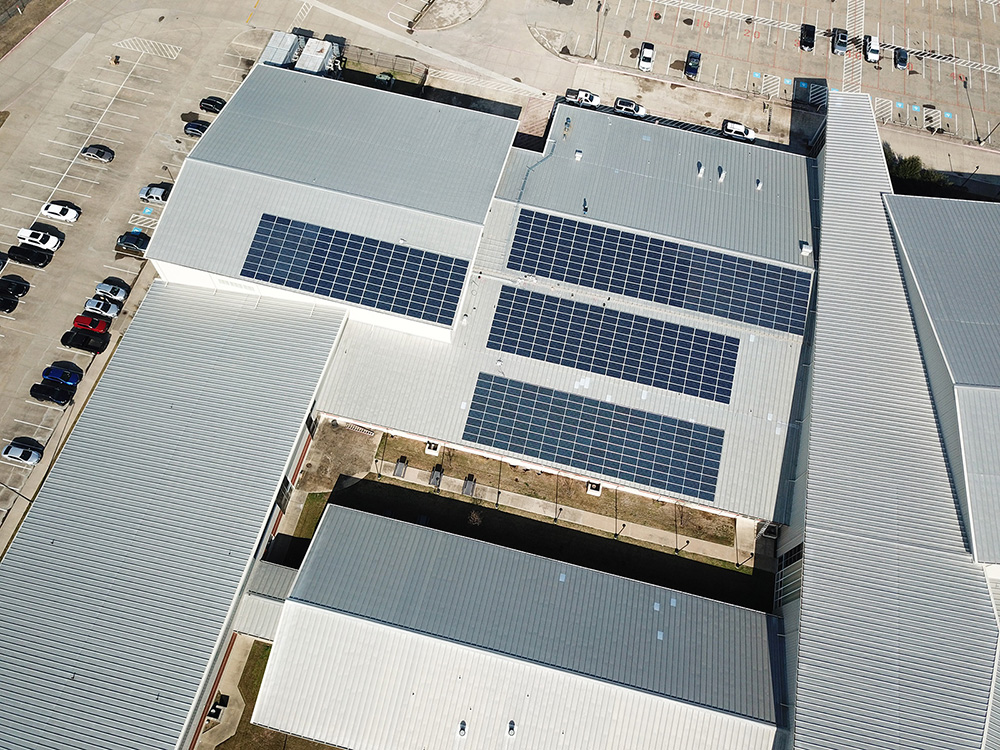
Commercial solar is the installation of a solar photovoltaic system, sized specifically to a business's electrical load, on a rooftop, ground-mount, or carport structure. Unlike residential solar, commercial systems are engineered around three-phase electrical service, higher energy consumption profiles, and the specific rate structures Canadian businesses are billed under, including the demand charges that often make up a larger share of a commercial bill than most owners expect.
For most Canadian businesses, the financial case rests on three things working together: the federal and provincial incentive stack, a system sized correctly to actual usage rather than roof space, and a realistic read of the utility rate schedule the business is billed under. Get any one of those wrong and the payback period stretches; get all three right and commercial solar in Alberta and British Columbia typically pays back in the 4 to 7 year range, based on the 30% federal Clean Technology ITC and CCA Class 43.1/43.2 depreciation stacking with provincial programs.
| System Size | Typical Business | Illustrative Cost Range |
|---|---|---|
| 50–100 kW | Small commercial: retail, office, small warehouse | $92,500–$185,000 |
| 100–500 kW | Mid-size: manufacturing, distribution, multi-tenant | $185,000–$925,000 |
| 500 kW+ | Large: industrial, institutional, portfolio-scale | $925,000+ |
Illustrative figures at ~$1,850/kW installed, before incentives. Actual cost depends on roof condition, electrical service, and site-specific factors.
Solar reliably reduces the energy (kWh) portion of a commercial bill, but for many Alberta and BC businesses, the demand charge, billed against your highest 15-minute draw of the month, makes up 30 to 50% of the total invoice and doesn't move much with solar alone. This is why we build demand shaving, also called peak shaving, into commercial proposals alongside solar: pairing generation with battery storage targets both halves of the bill instead of just one. See our full breakdown of how demand ratchets and rate-tier migration work for the mechanics.
Beyond the direct payback, commercial solar gives Canadian businesses a hedge against rising and volatile electricity rates, a measurable step toward ESG and sustainability reporting commitments, and in owner-occupied buildings, a documented increase in property value. For businesses managing multiple sites across Alberta and British Columbia, a consistent engineering and incentive-capture approach across every location keeps the numbers comparable site to site.
A proper commercial energy proposal is an audit of your costs, not a sales pitch. It's the cheapest way to find out whether solar, storage, or peak shaving actually pencils for your building.
Interval data shows what actually drives your bill, including the demand charges most owners have never had explained, which can be 30 to 50% of the total invoice.
The 30% federal ITC and CCA depreciation modeled against your actual numbers, not generic percentages, plus provincial programs for Alberta and BC.
Cash, loan, and CEIP property-tax financing compared side by side on your project, so the decision is yours with the full picture in front of you.
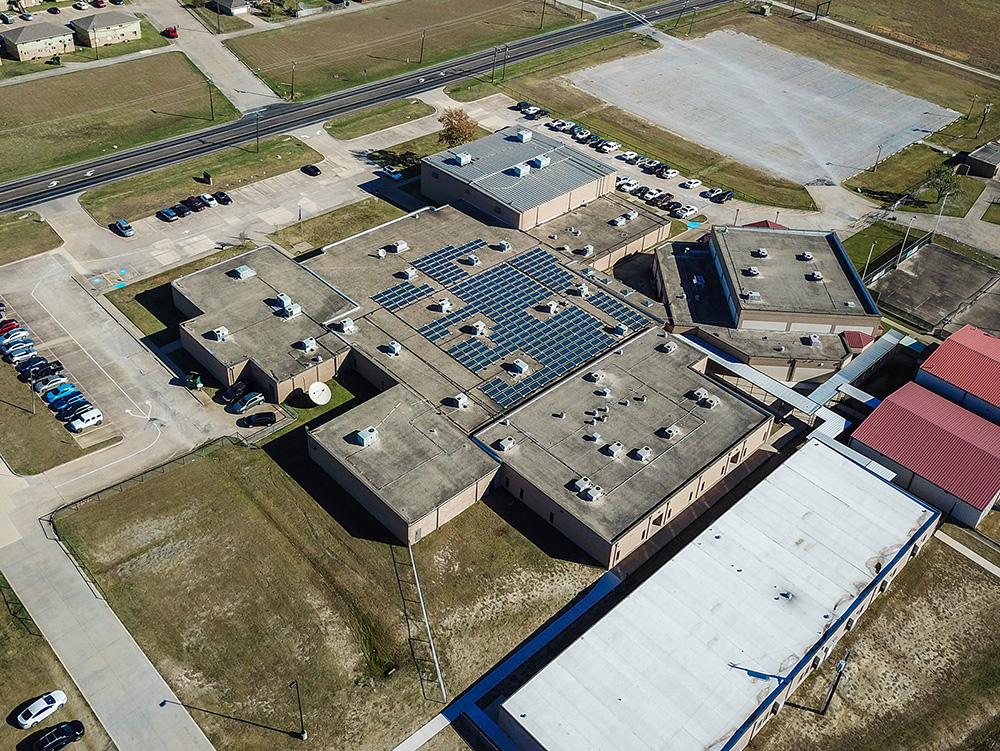
Solar, storage, and demand management work together to reduce what your business pays for electricity, whether you're on ENMAX/EPCOR rates in Alberta or BC Hydro/FortisBC rates in BC.
Rooftop and ground-mount solar systems sized to your facility's load, engineered by Red Seal electricians and backed by 30-year performance warranties on Tier 1 modules.
Explore Commercial Solar →Pair solar with on-site battery storage to shift consumption away from peak-priced hours, ride through outages, and capture the federal ITC on storage as well as generation.
Explore Battery Storage →Alberta and BC utilities bill industrial and large commercial accounts on peak demand (kW), not just consumption (kWh). Peak shaving software and battery dispatch can cut that peak charge significantly.
Explore Peak Shaving →Add commercial EV charging to your parking lot or fleet yard, engineered alongside your electrical service and, where it makes sense, paired with solar and battery storage.
Explore EV Charging →Our primary installation partner in Alberta and BC, Orizon Energy, is a Solar Alberta Gold Supporter and SolarEdge Preferred Partner with 2,400+ systems installed since 2022 and a multi-layer quality assurance process on every commercial project.
Canadian businesses can combine national and provincial programs to significantly reduce net system cost. Details vary by province and project size, see the full breakdown on our incentives pages.
30% Clean Technology Investment Tax Credit (refundable) plus 100% first-year CCA write-off under Class 43.1/43.2 for equipment in service before 2028.
Canada Incentives →Microgeneration net billing, CEIP property-tax financing in Calgary and Edmonton, Emissions Reduction Alberta programs, and carbon credit sales.
Alberta Incentives →7% PST exemption on solar and battery equipment, BC Hydro Self-Generation Service Rate, and FortisBC net metering for eligible territory.
BC Incentives →
A straightforward, no-pressure path from first contact to an installed system.
We review your facility, utility rate, and energy goals to determine whether solar, battery storage, or peak shaving is the right starting point.
We map every federal and provincial program your project qualifies for, and compare cash, loan, and CEIP financing options.
We connect you with a vetted, licensed commercial installer and electrician in your province to design, permit, and build the system.
Get a free, no-obligation commercial energy assessment covering solar, battery storage, and peak shaving potential for your site.
